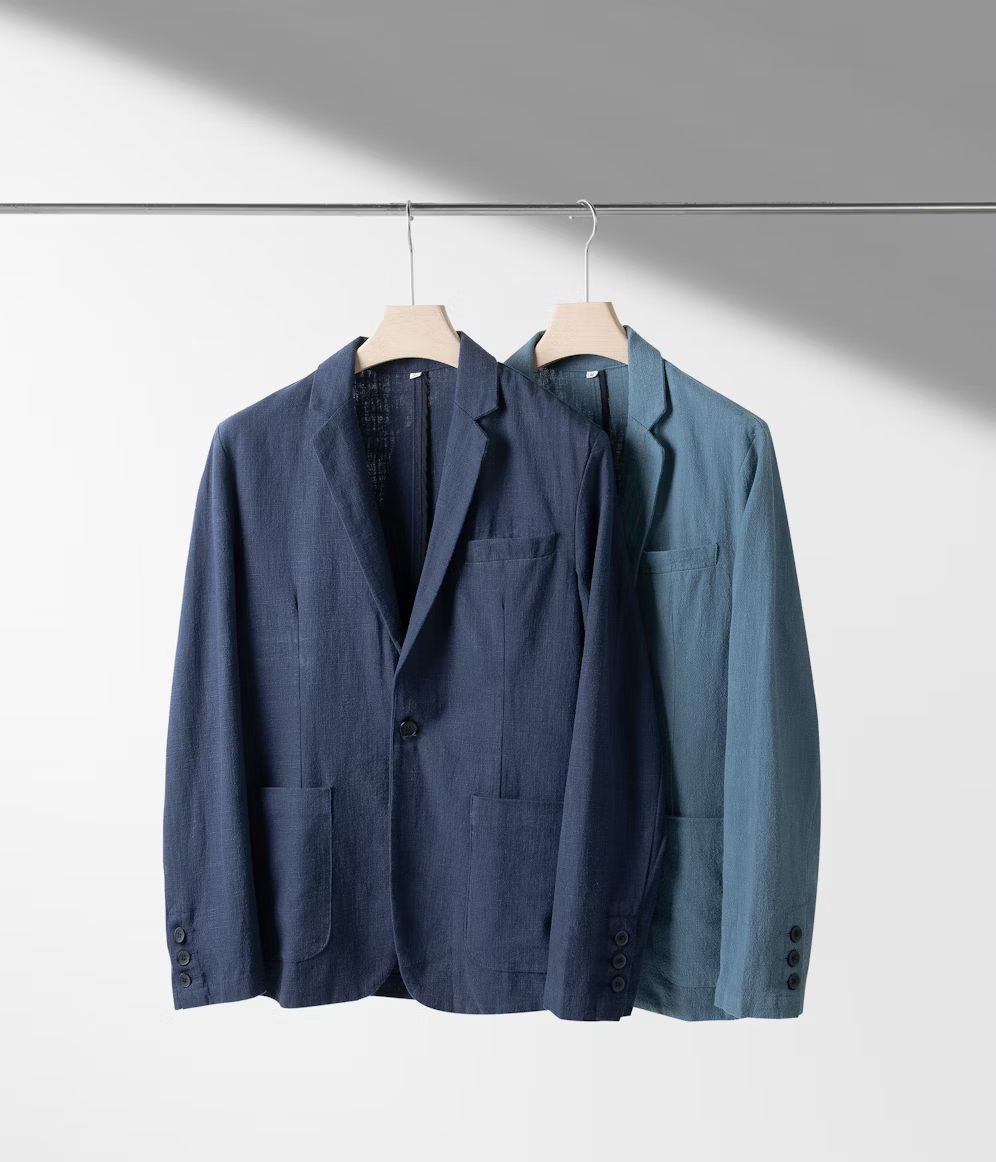
How should a suit fit?
Ask most men what makes a suit look expensive, and they’ll talk about fabric. Merino wool, Italian mills, a particular weight or weave. There are also many different tailored suit styles, each with its own characteristics, but the most important thing at the end of the day is how the suit fits. A suit cut from the finest cloth in the world will still look wrong if it pulls across the back, gapes at the collar or swamps the wearer through the shoulders. Fit is what separates a suit that simply covers the body from one that works with it.
Most men can tell you they don't feel quite right in a suit without being able to say why. It might be a shoulder seam sitting slightly past the natural line, a sleeve that's a touch too long, or trousers that bunch at the ankle. Small details, but they add up to the difference between looking sharp and looking like you're wearing someone else's jacket.
The Shoulders
The shoulder is the foundation of a jacket. Everything else, the drape of the chest, the hang of the sleeves, is built from this single point, and once it's cut and sewn, it's extremely difficult to alter without unpicking a large part of the jacket's construction.
The seam should sit exactly at the edge of your natural shoulder, where the bone rounds into the arm, and the jacket collar should sit flush against your shirt collar without gapping at the back of the neck. The fabric across the top should lie flat, without dimpling or bunching near the jacket collar, and when you move your arms, the shoulder should move with you.
The most common issue is a seam that extends too far past the natural shoulder point, often mistaken for a broader look but really just an oversized jacket. A seam that sits too far inward pulls the sleeve tight and restricts movement, while divots or rippling across the shoulder blade usually point to padding that doesn't suit the wearer's build.
The Chest & Jacket Body
The chest and body determine how the jacket sits when buttoned and how it moves when it isn't. This is the area most men associate with comfort, and it's also where a poor fit becomes obvious fastest, whether in photographs or in person.
When buttoned, the jacket should close cleanly with enough room to slide a flat hand between the lapel and your chest without pulling. There should be no visible X-shaped creasing radiating out from the button, which is the clearest sign of a jacket that's too small. Through the waist, it should follow the body's natural taper without clinging to it.
A tight chest shows that X pattern the moment it's buttoned. Too loose, and excess fabric pools at the sides or across the lower back when you move. Another common mistake is a jacket cut well through the chest but too straight through the waist, which adds bulk rather than shape.
The Sleeves
Sleeves are one of the more technical parts of jacket construction, and one of the easiest to get wrong. Three elements are at play: how much the shirt cuff shows, how the sleeve hangs from the shoulder (its pitch), and how close it sits to the arm.
A well-set sleeve allows about half an inch of shirt cuff to show below the jacket sleeve with arms relaxed. Correct pitch means the sleeve hangs naturally without twisting forward or pulling back as the arm moves. Width should sit close to the arm without gripping it, leaving room to bend the elbow comfortably.
Sleeves cut too long hide the cuff entirely and make the jacket look oversized, while sleeves cut too short expose too much of the dress shirt. Incorrect pitch usually shows as folds or twisting fabric near the shoulder, and sleeves too tight around the bicep will pull at the seam whenever the arm is raised.
The Jacket Length
Jacket sleeve length affects proportion more than almost any other measurement. A jacket cut too short or too long throws off the balance of the whole silhouette, and it's one of the areas off-the-rack suits get wrong most often, since standard lengths are built around average proportions rather than individual ones.
As a general guide, the hem should sit roughly in line with the curve where your hand meets your wrist, arms relaxed by your sides. It should cover the lower curve of the backside without extending so far that it starts to look like a coat, and front and back should sit level.
A jacket that finishes too short exposes too much of the trousers underneath, throwing off the balance between upper and lower body. One cut too long can make the wearer look shorter and heavier, and uneven hems, where the back sits higher or lower than the front, usually point to poor construction.
Trousers
Suit trousers are frequently treated as an afterthought, but a mismatch between jacket and trousers is one of the fastest ways to undercut an otherwise sharp suit. The waist, hip and break each deserve as much attention as any part of the jacket.
The waistband should sit comfortably without needing a belt, with roughly a finger's width of ease. Through the hip and thigh, trousers should follow the body's shape without pulling or bagging. The break, where the hem meets the shoe, is a matter of preference, but a slight break with a gentle touch on the dress shoe suits most builds and occasions.
Trousers sitting too low or too high throw off the balance of the outfit, particularly against the jacket length. A tight fit through the hip shows horizontal creasing when standing, while a loose one looks baggy and shapeless. Excessive trouser length, where fabric pools at the ankle instead of breaking cleanly, is one of the most common issues we see and quickly ages an otherwise modern suit.
Bespoke vs Off-the-Rack
Off-the-rack suits are built to a standard set of measurements, then adjusted where possible after purchase. For men whose proportions sit close to those standards, this can work reasonably well. For most, though, the body doesn't match a single standard. One shoulder sits lower than the other, the chest is fuller than the waist suggests, or the arms run longer than the jacket's stock sleeve allows. Alterations can help, but they're working within the limits of a garment not designed around the individual to begin with.
Made-to-measure starts from the opposite direction. Rather than adjusting a standard pattern afterwards, the pattern is built around your own measurements from the outset. Every area covered above is considered individually rather than compromised to fit a general size range.
At Patrick Mackenzie, this process is guided by formal training in tailoring and menswear design, developed over years of working directly with clients across Brisbane. Every fitting is treated as its own project, because every body is different.
FAQ
How do I know if my suit jacket is a correct fit?
Check the jacket shoulder first: the seam should sit right at the edge of your natural shoulder. From there, look for pulling or X-shaped creasing at the chest, confirm the sleeves show a little shirt cuff, and check the jacket covers your seat without running past your knuckles.
Should a suit jacket be tight or loose?
Neither. A well-fitted jacket sits close to the body without restricting movement. If you can pinch more than a small amount of fabric at the sides when buttoned, it's too loose. If it pulls or creases when buttoned, it's too tight.
How much should a suit jacket cover?
The hem should sit roughly in line with the curve of your wrist, covering the seat fully at the back. This keeps the jacket in balance with the trousers and avoids the exaggerated look of a jacket cut too short or too long.
What is the correct trouser break for a suit?
Most men are well served by a slight break, where the hem just touches the top of the shoe without bunching. This gives a clean line that works across most occasions, though personal preference can shift it slightly.
Find your perfect fit with made-to-measure
A well-fitted suit isn't the product of a single measurement taken in a hurry. It comes from close attention to every area covered here, from the shoulder seam to the hem of the dress pants, and an understanding of how they work together rather than in isolation.
If you'd like to see what a professional fitting process looks like, we'd welcome the chance to show you. Book an obligation-free appointment with Patrick Mackenzie, and we'll talk through your shape, your wardrobe and what a tailored suit built around you should actually feel like.

.jpg)